2026 We're Honoring the Life and Legacy of George Jarrett Helm Jr. and James Kimo Mitchell
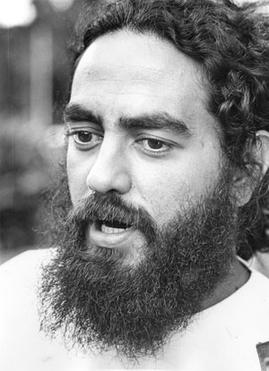
George Jarrett Helm, Jr.: Remembering a Visionary of the Hawaiian Renaissance
Early Life on Molokaʻi (1950–1964)
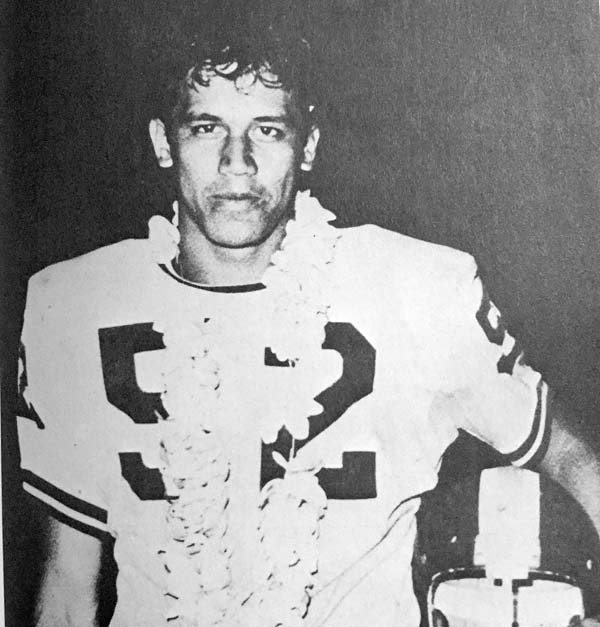
In the early 1950’s, George Jarrett Helm, Sr and his wife, Melani Koko Kanohowailuku Helm, moved from the plantation village of CPC (Kualapuʻu) to Kalamaula Homestead lands. On March 23, 1950, George Jarrett Helm, Jr., was born onto their Kalamaula Homestead as their fifth of seven children. From his birth, we called George, Jr., “Jarrett;” and as a student on the St. Louis High School campus of Kalaepōhaku, Jarrett was now called by his first name, George.
Growing up on Molokaʻi, brother George was active in little league baseball and biddy basketball. His talents were recognized by St. Louis alumni, Bill Lee Puleloa, who also is a hānai son of the Helm ʻohana. Jarrett made his first flight off Molokaʻi to Honolulu with his hānai brother.
Education and Cultural Awakening
As a young kuaʻāina leaving his Kalamaula Homestead farm lands, he was to experience a newness across the ocean. He learned to work the ʻāina alongside his dad and brothers and now he carries those values to the urban life of Honolulu. He left his belongings home. He left behind his crab nets and fishing throw nets to a new world of a private school offering him scholarship to play in the interscholastic league with baseball coach, Francis Funai, and basketball coach, Walter Wong. Jarrettʻs athletic journey at Kalaepōhaku was shortlived. George was attracted to join the Hawaiian club, Hui O Nā ʻŌpio, pioneered by Kumu Keola Lake. Throughout his immersion into the cultural teachings of Kumu Lake, he was inoculated by the music of John and Kahauanu Lake.
Music as a Calling
After graduation from St. Louis in 1968, George attended BYU Lāʻie. He then joined Hawaiian Airlines as a travelling musician and singer for the hula dancers who performed to entice visitors to Hawaiʻi. Georgeʻs disillusion began to populate within his soul to how he felt the need to share his gift of Hawaiian music to the Kamaʻāina instead of enticing the tourist to Hawaiʻi. George never defined himself as an entertainer, but as a musician. He valued his Hawiian songs to reach nā kūpuna because of the need to cherish love for the cultural of Hawaiʻi Nei. He performed at the Holiday Inn in Waikīkī and furthered his unique falsetto and guitar strumming of performing at the Gold Coin Restaurant and Lounge in Honolulu. His “turning point” began from the echos of the hawaiian songs of yesterday which he performed. In 1975, Georgeʻs intensity and love for everything Hawaiian and nā kūpuna, joined activisim with Dr. Emmett Aluli, Walter Ritte and his brother, Adolph Helm, to protest with Hui Alaloa, opening the locked gates to Kawakiu in west Molokaʻi.
Kahoʻolawe and the Birth of a Movement
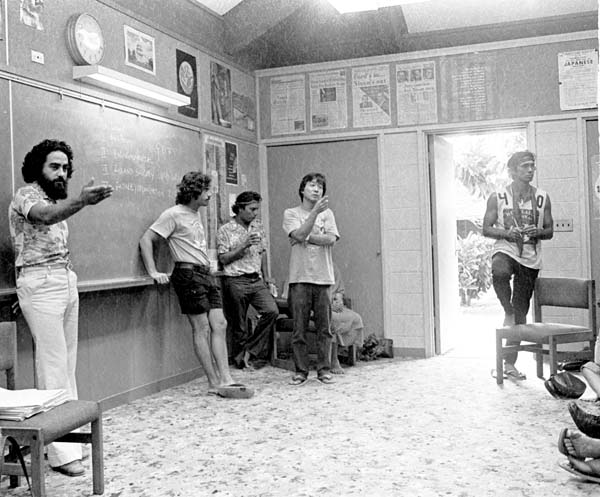
“Stop the Bombing!” became the uprooting of challenging the United States Navy. Return Kahoʻolawe to Hawaiʻi. Stopping the Bombing of Kahoʻolawe was a heighten activism cry in 1976. Nine activists occupied the island of Kahoʻolawe in early January, 1976. George was one of the nine. The Kahoʻolawe movement did not have social media but the following of people in the state of Hawaiʻi and beyond – national and international were vast and widespread. Messages were carried to the islands and beyond by Georgeʻs unique guitar strumming and songs in concert with the charismatic beat of George Jarrett Helm, Jr. and warriors, Emmett Aluli and Walter Ritte. George’s mantra was, “Kahoʻolawe is the “catalyst” for Hawaiʻi, and we need to do our homework and protect our islands and its environment and resources.“ George lobbied with their protest to align with the politicians in Washington D.C., Hawaiʻi State legislators, and organized community rallies.
Disappearance and Enduring Legacy
George Jarrett Helm, Jr., and Kimo Mitchell disappeared off Kahoʻolawe on March 7, 1977. The humble footprints from the ʻāina hoʻopulapula, Kalamaula Homesteads, George Jarrett Helm, left his soul as a visionary Hawaiian activist, philoshopher and musical icon and who many consider as the “father of modern-day Aloha ʻĀina” (love of the land) movement. Georgeʻs fiery eloquence and profound cultural grounding left an unyielding beacon for people. Dr. Emmett Aluli, who upon the disappearance of George, made a solemn commitment to follow their vision to their unyielding beacon. George and Emmet were co-founders of the Protect Kahoʻolawe ʻOhana (PKO). Dr. Emmett Aluli, made a dedicated commitment to the vision, “Stop the bombing of Kahoʻolawe.” Today, 2026, marks 50 years of the challenging journeys of the Protect Kahoʻolawe ʻOhana and the rennaisance of our Hawaiian Culture. The Navy officially stopped bombing Kahoʻolawe was a direct victory for Dr. Aluli and the Protect Kahoʻolawe ʻOhana in 1990. The Navy’s 50 years of destroying our lands is painful but cessation of the bombing, was a turn for PKO, and grassroots Hawaiian activists who spent nearly 15 years filing lawsuits, and occupying the island to defend its sacred landscapes.
Mahalo, Protect Kahoʻolawe and our Hawaiian Soul.
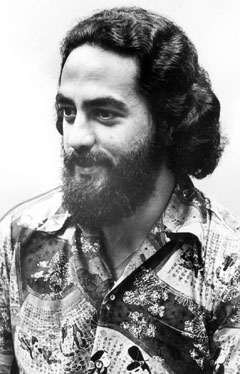
James Kimo Mitchell: Steward of the ʻĀina and Kiaʻi of Kahoʻolawe
Early Life in Keʻanae (1952–1969)
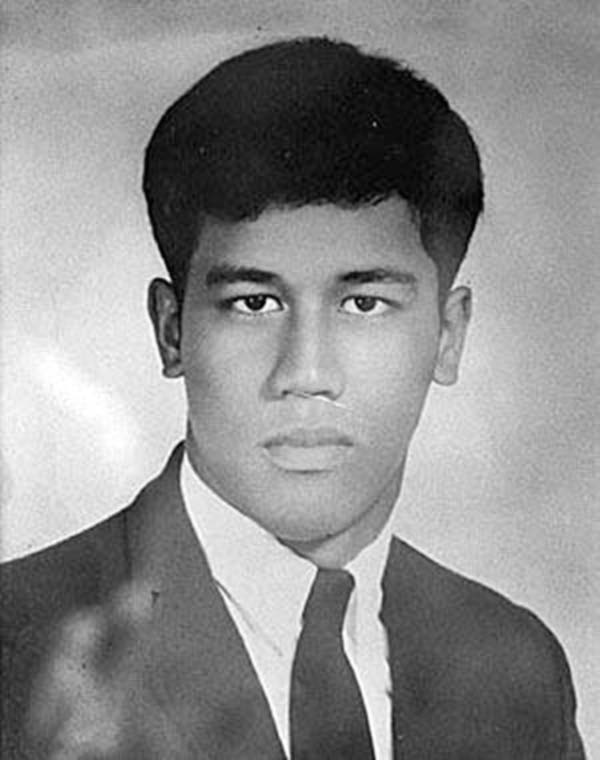
James Kimo Mitchell, son of Harry Kunihi Mitchell Sr. and Pearl Mitchell, was born in Keʻanae, Maui, on February 15, 1952. Raised in the rural and close-knit community of Keʻanae alongside his siblings, Kimo spent his childhood farming kalo. Through this way of life, he learned from an early age the values of hard work, humility, kuleana, and aloha ʻāina that would guide him throughout his life.
Education and Returning Home
Known by family and friends as a smart, strong, and capable young man, Kimo excelled in athletics, particularly swimming and football. When the Mitchell ʻohana relocated to town so the children could attend school, he continued to distinguish himself as a standout football player at Baldwin High School. Following graduation, he attended Coalinga Junior College and later Fresno State College in California. Though he possessed the talent and opportunity to pursue football at the professional level, Kimo chose a different path. Rather than seek personal fame, he returned home to Hawaiʻi, where his heart remained with his ʻohana, his community, and the land that had raised him.
Stewardship of the ʻĀina
Upon returning to Maui, Kimo joined the National Park Service and worked in the Kīpahulu District of Haleakalā National Park. There, he devoted himself to the stewardship of Hawaiʻi’s natural and cultural resources. Outside of work, he hunted, fished, farmed, and paddled with the senior men’s crew of the Hāna Canoe Club. Those who knew him remember a man deeply connected to the ʻāina and ocean, whose actions reflected a lifelong commitment to aloha ʻāina.
Kahoʻolawe and Quiet Leadership
During the movement to stop the bombing of Kahoʻolawe, Kimo became a trusted friend and supporter of the Protect Kahoʻolawe ʻOhana. Though not among its most visible leaders, he earned the respect and affection of many involved in the movement. He quietly supported their efforts, often helping transport participants between the islands. His dedication was never driven by recognition, but by his love for Hawaiʻi and his belief that the islands deserved to be protected for future generations.
On January 30, 1977, Kimo and Sluggo Hahn transported several members of the Protect Kahoʻolawe ʻOhana to Kahoʻolawe, including George Helm. As the struggle to protect the island continued, concern grew for activists Walter Ritte and Richard Sawyer, who had remained on the island. Determined to assist their friends, George Helm, Kimo Mitchell, and Billy Mitchell set out across the channel on March 5, 1977. After encountering difficulties and becoming stranded, the men awaited a scheduled pickup that never arrived. Days later, George Helm and Kimo Mitchell entered the rough waters on surfboards in an effort to seek help. They were last seen near Molokini and were never found.
Legacy of Service
Kimo’s sacrifice became forever intertwined with the history of the Hawaiian movement and the struggle to protect Kahoʻolawe. While others may have stood before crowds and cameras, Kimo embodied his values through action. He demonstrated that leadership is not always measured by words, but by one’s willingness to serve, to sacrifice, and to stand firm in what is right.
As George Helm once expressed, Kimo possessed all the qualities hoped for in future generations of Hawaiians: pride in his culture, confidence in who he was, a strong education, a clear sense of purpose, and a willingness to give of himself for others. Caring for the land was Kimo’s greatest strength. He was not known as a public speaker, but he lived aloha ʻāina every day of his life.
Today, James Kimo Mitchell is remembered as a beloved son, brother, uncle, paddler, fisherman, farmer, steward of the land, and protector of Hawaiʻi. His legacy lives on through the people he inspired and through the enduring movement to restore and protect Kahoʻolawe. His life reminds us that the deepest expressions of aloha are often found not in words, but in service, humility, and unwavering devotion to one’s people and homeland.